Turnkey Rentals Meaning: What It Is and What to Check
October 18, 2026
A turnkey rental is an investment property sold already renovated, already leased and already placed with a property manager, so the buyer can collect rent from the first month without doing the work. Investopedia describes it as a fully renovated, tenanted and professionally managed property that lets an investor, in theory, receive rental income right away. The catch sits in the words “in theory.” Turnkey is a sales label, not a legal or lending standard, so the quality of any given deal depends on what you verify.
This guide explains what the term covers, how it differs from a rehab rental, what it does not include, and the checks we would run before buying one.
TL;DR
- A turnkey rental is a property that is renovated, leased and managed at the point of sale, so you own it without running renovations or day-to-day operations.
- The label is marketing, not a legal or underwriting category. You must verify the condition, the lease, the market rent and the manager yourself.
- Turnkey usually costs more than a distressed property you would rehab. You are paying for time saved and risk handed off, not for a bargain.
- Plan for vacancy and repairs: set aside a reserve even though the house is “ready.”
- Treat the included property manager like a new hire. Interview them and ask for performance data.
Table of Contents
- What “turnkey” means in rental real estate
- Turnkey vs. rehab rental: how the two paths compare
- Are turnkey properties worth it?
- How to tell whether a property is really turnkey
- Our perspective on turnkey
- Turnkey with a manager you choose
- Taxes and lending basics to raise early
- FAQ
- Sources
What “turnkey” means in rental real estate
The phrase comes from the idea that the buyer only has to turn the key. In rental investing, that image stretches to cover three things at once:
- A finished property. Renovations are done, major systems work and the home is in rentable condition.
- A tenant in place. Many turnkey sales include an existing lease, so rent starts on day one rather than after a vacancy.
- A manager in place. A property management company already handles rent collection, maintenance and tenant issues.
A legal glossary entry from Barnes Walker gives the same three-part definition: improvements, tenant placement and management are already in place when you buy. Some sellers use the word more loosely, to mean only that the house is move-in ready. A home-buying explainer ranking for this query uses it that way, noting that a turnkey home needs few or no renovations and may cost more.
That difference matters. When you see “turnkey” on a listing, ask which of the three parts is actually included.
Turnkey home vs. turnkey rental
A turnkey home is often just a house a buyer can move into. A turnkey rental adds the investment layer: a tenant, a lease and a manager. If you plan to live in the property, the second definition is not what you want. If you plan to hold it as an investment, the first definition alone is not enough.
Does turnkey include furniture?
Usually not. The term refers to the structure and its systems. If you add furnishings to earn rent, the IRS says in Publication 527 that you cannot deduct their cost as a rental expense, but you may recover it through depreciation once the items are placed in service. Ask a CPA how that applies to your return.
Turnkey vs. rehab rental: how the two paths compare
The other common route into rental investing is to buy a dated or distressed property, renovate it, lease it and manage it (or hire someone to). Here is how the two compare.
| Factor | Turnkey rental | Rehab rental |
|---|---|---|
| Condition at purchase | Renovated, rentable | Needs work, sometimes major |
| Purchase price | Typically a premium | Typically lower |
| Time to first rent | Immediate if a tenant is in place | After renovation and leasing |
| Your workload | Low, mostly oversight | High unless you hire a project manager |
| Cost certainty | Clearer up front | Depends on scope and surprises |
| Location flexibility | High, you need not live nearby | Limited by how far you can supervise |
| Upside from forced appreciation | Smaller, work is already done | Larger if you add value well |
Investopedia notes that turnkey properties generally trade at a premium compared with distressed ones, and that profitability depends heavily on the quality of the management firm. That is the honest summary: you pay more up front, and you are betting on someone else’s execution.
Who turnkey suits
Turnkey tends to fit three kinds of buyers:
- First-time investors who want to learn the business without running a renovation.
- Busy professionals who have capital but little time.
- Out-of-area investors who want exposure to a market they do not live in.
Rehab suits people with construction knowledge, local contractors and the patience to carry a property through a vacant stretch. Many experienced investors do both, using turnkey to diversify into new cities and rehab where they have an edge.
Are turnkey properties worth it?
Sometimes. The value is real when the numbers hold after you account for management fees, vacancy, maintenance and taxes. It disappears when you buy on the seller’s pro forma alone.
Where turnkey earns its premium
- You skip the renovation risk, the contractor hunt and the carrying costs of a vacant property.
- You can start earning rent sooner, if a lease is in place.
- You can buy in a market without moving to it.
Where it goes wrong
- “Rent-ready” that is only cosmetic. A fresh coat of paint and new flooring can hide an aging roof, HVAC or plumbing. HOLD.co’s checklist warns that some properties are marketed as turnkey without being truly ready to rent.
- Inflated rent figures. The projected rent may be above what the market supports.
- A weak manager. Included management is not automatically good management.
- No cushion. New investors often rely on the pro forma and forget that repairs, vacancy and turnover quickly drain cash flow.
A tool you will see in forums is the 2% rule: monthly rent should be at least 2% of the purchase price. It is a quick screen, nothing more. Lender guidance on turnkey buying cautions against relying on high-level ratios without examining actual management costs, local demand and tenant screening, because a property can look attractive on price and still run at negative cash flow. In many markets today, a 2% property is rare, and when you find one, ask why.
A worked example of the reserve math
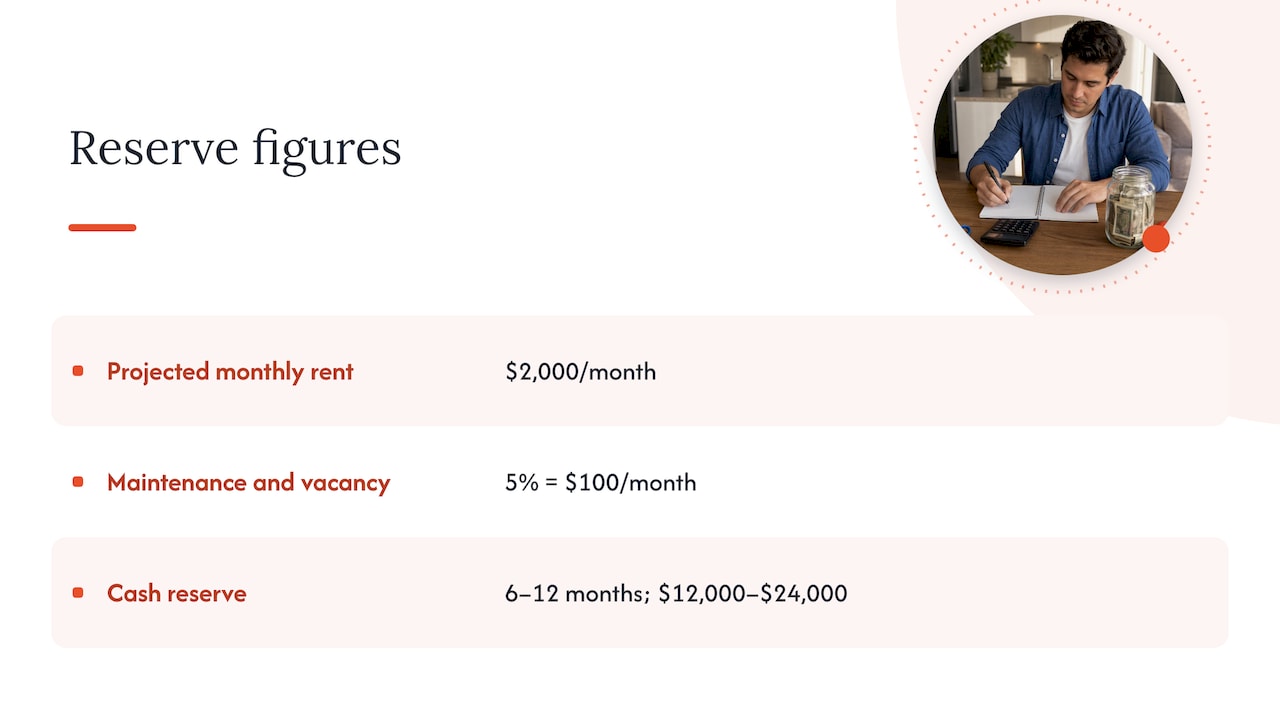
Say a turnkey single-family home is projected to rent for $2,000 a month. Investopedia advises setting aside at least 5% of gross rent for maintenance and vacancies, which here is $100 a month, on top of a separate cash reserve. NAR’s investor Q&A recommends holding the equivalent of 6 to 12 months of the projected rent in cash. On this example that is $12,000 to $24,000 sitting outside the purchase price and down payment. If your plan only works when nothing breaks and the unit never sits empty, it is not a plan yet.
How to tell whether a property is really turnkey
Use this order. Each step can end the deal, which is the point.
1. Separate the three promises
Write down what the seller says is done: renovation, lease, management. Then ask for proof of each. Photos and a scope-of-work summary are not proof. Invoices, permits and a signed lease are.
2. Order your own inspection
Never rely on the seller’s financials or inspection. Hire an independent inspector and ask specifically about the roof, HVAC, water heater, plumbing, electrical and any code issues. Roofs are a classic hidden cost: a one-page roof evaluation checklist gives you a plain list of what to look for in shingle condition, and it helps you ask better questions of the inspector. Capital items like a full roof replacement must be capitalized and depreciated for tax purposes, according to the IRS, while ordinary repairs are generally deductible when incurred.
3. Read the lease and the rent ledger
Check the lease term, the rent amount, the deposit, the move-in date and the payment history. A tenant who pays late every month is not the same asset as one who pays on the first. Confirm that the deposit transfers to you at closing.
4. Verify the market rent independently
Do not take the seller’s number. Pull comparable listings and ask a local manager what the home would actually lease for. Lenders do this too: Fannie Mae’s selling guide sets documentation requirements for rental income on one- to four-unit investment properties, which is a good reminder that market rent needs a paper trail, not a promise.
5. Check rentability
Is it easy to find tenants in that specific neighborhood? Look at days on market for similar rentals, school zones, employers nearby and new supply. BiggerPockets’ due diligence guide argues that diligence matters even more with turnkey than with other strategies, and it names rentability as a core test. Our own writing on why Dallas-Fort Worth owners can’t rely on demand alone makes the same point for one market: strong demand does not excuse weak leasing and management.
6. Vet the manager like a new hire
The same BiggerPockets guide recommends interviewing the included manager, checking their screening process and confirming you will have access to performance data in real-time software. Questions to bring:
- How do you screen tenants, and what are your approval criteria?
- What is your average days-to-lease and your renewal rate?
- Who performs maintenance, and how are vendors chosen and priced?
- Can I see owner statements and work-order history from similar properties?
- How do you handle things like leaks before they become claims? Some managers now use sensor-based alerts, and an operational guide to tenant leak notifications shows what good reporting to residents can look like.
Our posts on what to ask a potential property manager and how a property manager screens prospective tenants go deeper on both.
7. Stress-test the numbers
Rebuild the income statement yourself: rent, minus vacancy, management fee, leasing fee, maintenance reserve, insurance, property taxes and any HOA dues. Then run it again with one month of vacancy and a $3,000 repair. If you plan to use a DSCR loan, the lender will want accepted rent that supports the payment, plus appraisal, condition, credit and reserve documentation.
Our perspective on turnkey
We manage and sell rental property across 10 regional markets, and after more than 15 years and 2,700 properties served, one pattern is hard to miss: the label on the listing tells you almost nothing about how the property will perform in year two. What decides it is the operating side. How tenants are screened, how fast maintenance is handled, how often residents renew, and how clearly the owner can see the numbers.
That is why we think a turnkey buyer should evaluate the manager before the house. A renovated kitchen is easy to photograph. Retention, response times and honest owner reporting are not. Our model is built around those things: a pod-based team structure so each owner has a focused group behind their property, in-house maintenance, transparent vendor selection and proactive resident retention. We would rather you ask hard questions of us than trust a brochure, and you should ask the same of anyone offering you a turnkey deal.
We also believe turnkey and long-term wealth are compatible only when the buyer keeps a reserve and a realistic view of costs. Removing hands-on work is a fair goal. Removing oversight is not.
— MediaBeast
Turnkey with a manager you choose
If you buy a rental, or already own one, you do not have to accept the manager that comes with the sale. Our property management team handles leasing, tenant placement, maintenance and owner reporting, and our brokerage services help investors buy and sell. For investors building a larger position, we also work with multifamily and build-to-rent owners. Pricing is not published, so contact us for details on your property and market.
Taxes and lending basics to raise early
Two topics come up after the offer, and both are better handled before it.
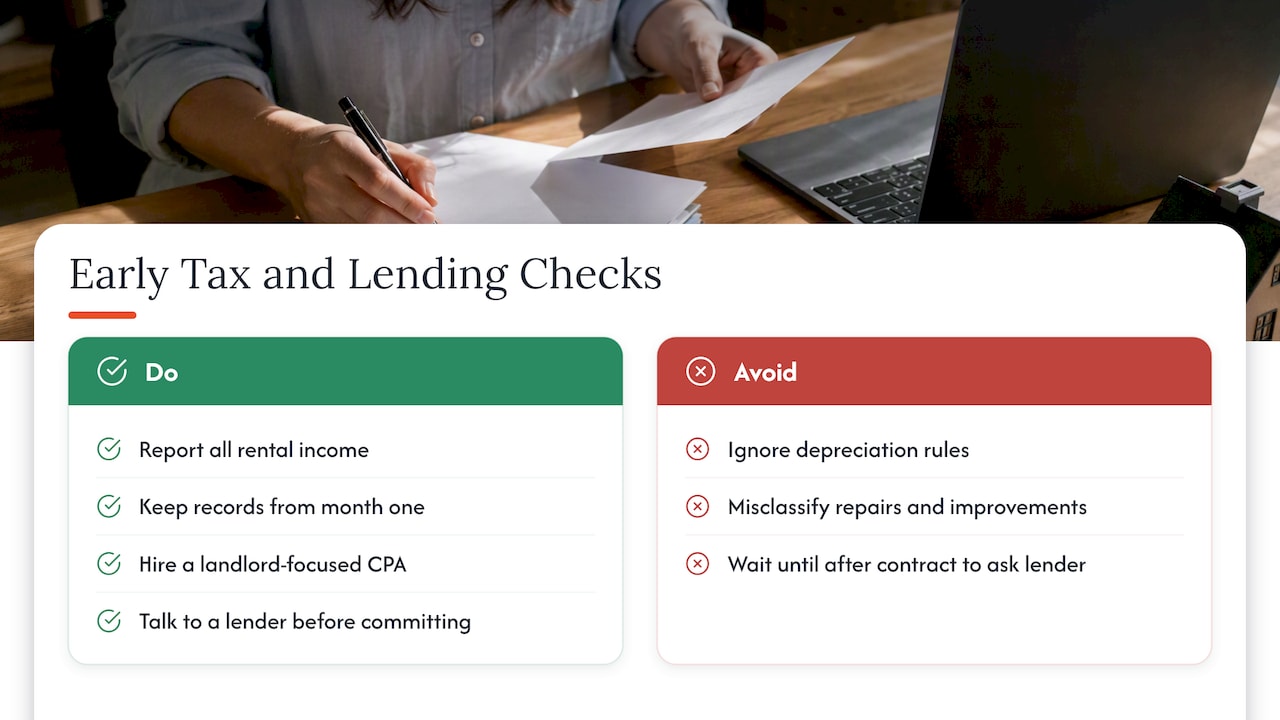
Taxes. Rental income is generally reportable, and the IRS explains in its rental real estate tips that you must include all amounts you receive as rent. Keep clean records from the first month. Depreciation and the repair-versus-improvement line are the two areas where mistakes are common, so a CPA who works with landlords is worth hiring.
Financing. Investment property loans have different documentation than a primary-residence mortgage. Expect the lender to want proof of rent, either from the lease or from a market-rent appraisal, and to ask about reserves. Talk to a lender before you commit to a purchase contract, not after.
FAQ
What is a turnkey rental?
It is a rental property sold already renovated, leased and placed with a property manager, so you can own it and receive rent without handling renovations or daily operations. The term is a marketing label, so confirm each of those three elements yourself.
Are turnkey rentals a good investment?
They can be, especially for investors short on time or buying out of area. You usually pay a premium, and results depend on the property manager and on your reserves. Run your own numbers rather than the seller’s projections.
What is the 2% rule for rentals?
It says monthly rent should be at least 2% of the purchase price. It works as a quick screen only. It ignores management fees, vacancy, taxes, insurance and repairs, so do a full cash-flow analysis before you rely on it.
How do I know if a property is truly turnkey?
Get proof: an independent inspection, the signed lease and payment ledger, an independent market-rent check and a conversation with the manager. If any of the three promises (finished property, tenant, manager) cannot be documented, it is not fully turnkey.
Sources
- Turnkey Property Investments: Immediate Rental Income and Management Insights, Investopedia
- Turnkey Property, Legal Glossary, Barnes Walker
- Publication 527, Residential Rental Property, IRS
- Is This Real Estate Property Truly Turnkey? HOLD.co
- DSCR Loans for Turnkey Rentals: Buyer Guide
- Top 5 Questions Real Estate Investors Want Answers To, NAR
- How to Conduct Due Diligence on a Turnkey Property, BiggerPockets
- Rental Income from the Subject Property, Fannie Mae
- Tips on rental real estate income, deductions and recordkeeping, IRS