Build-to-Rent: Paving a New Way Forward
October 8, 2026
Part 1 of 2 — Takeaways from IMN Build-to-Rent Fall, Dallas
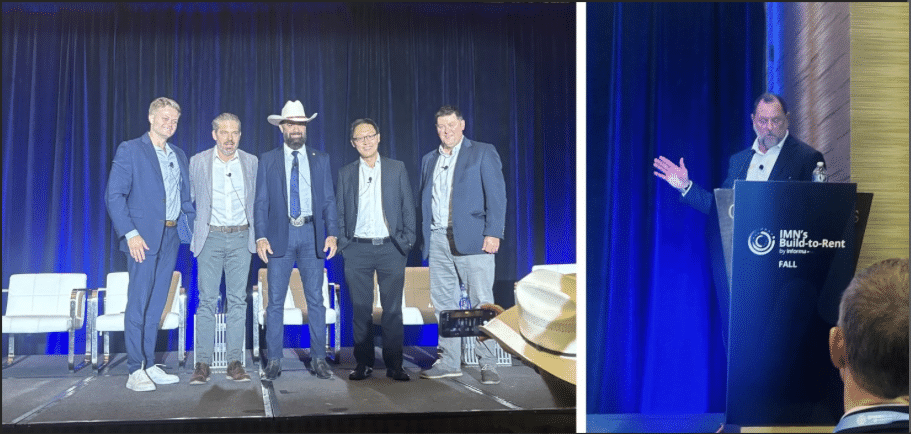
Build-to-rent (BTR) is moving from a niche to a permanent part of how America builds housing, and the industry knows it. I spent three days at IMN’s Build-to-Rent Fall conference in Dallas with more than 800 senior decision-makers: developers, operators, lenders and capital partners. One attendee summed up the mood: “very energetic, very vibrant.”
That energy has a reason. A new federal law, a reset in construction pipelines and steady renter demand are pushing BTR into its next phase.
The ROAD to Housing Act: from uncertainty to implementation
The 21st Century ROAD to Housing Act, signed July 11, 2026, moves the industry from legislative uncertainty to implementation. Starting January 7, 2027, owners of 350+ single-family homes can no longer buy existing homes, but they can still build new homes to rent, and an earlier forced-sale rule was dropped. The result: institutional capital is shifting from buying to building, making BTR the main growth lane for single-family rental investing.
Paving a new way forward
BTR is entering a new chapter. The law now favors building over buying, construction has slowed and demand is holding. The opportunity is there, but it belongs to investors who focus on the right submarket, control costs and run communities well.
My takeaways for investors:
- Think local. Underwrite the submarket, not the national headline.
- Build the hidden costs in early. Site work and delays belong in the budget from day one.
- Plan operations before groundbreaking. Staffing and systems decide whether a community performs.
- Design for retention. Communities residents want to stay in hold occupancy when concessions are everywhere.
Stabilized BTR: where interest is strongest
Stabilized BTR is drawing the strongest investor interest. Many investors would rather buy a community that is already built and leased than take on construction and lease-up risk. A stabilized asset comes with in-place income, real occupancy history and a clearer exit.
The ROAD Act supports this too: large investors can still buy homes from other large investors when the seller acquired them in compliance with the law. That keeps stabilized communities tradable at institutional scale. For developers, it means a deeper pool of buyers at the finish line. For investors, it is a lower-risk way into BTR.

An industry growing up
The panels in Dallas made one thing clear: BTR is no longer about simply building homes and renting them. Winning projects now come down to three disciplines.
- Controlling costs before they start. Britt Creer, President of Ranchland Homes, spoke about the hidden costs that derail projects and how developers can stay ahead of them. In my experience, items like site work, entitlements and schedule delays are where returns quietly erode, so they need to be in the budget from day one.
- Running operations at scale. Erica McLaughlin, Managing Director at RangeWater Residential, named staffing, operational efficiency and real-time decision-making as the challenges that keep operators up at night. A BTR community is spread out like a neighborhood but run like an apartment property, and that takes a different playbook.
- Designing for residents, not just units. Donald Ruthroff, Founding Principal of Design Story Spaces, made the case that smarter design improves the resident experience, builds real community and leads to better development. Layouts, green space and amenities are what make renters stay.
Together, these point to an industry that is maturing. The easy-money years rewarded speed. This cycle rewards execution.
In Part 2, I’ll turn to the broader single-family rental market: where SFR stands today, the outlook for 2027 and strategies investors are using to stay ahead.
Auben Realty has a variety of BTR opportunities across several different markets!
Kristen Brady, Auben
Sources
- IMN Build-to-Rent Fall 2026 event recap (speaker interviews)