How to Reduce Your Rental Vacancy Rate: A Landlord’s Playbook
October 23, 2026
You reduce a rental vacancy rate by attacking its three drivers in order: the days a unit sits empty between residents, how often residents leave, and whether the unit is priced and presented for the market it is actually in. Most owners focus on advertising. The bigger gains usually come from faster make-ready, a realistic asking rent, and renewals that start months before a lease ends.
This guide walks through how to measure vacancy, what the national numbers say, and the specific levers that shorten empty stretches. It draws on federal housing research and on how we manage single-family, multifamily and build-to-rent homes across our markets.
TL;DR
- Measure vacancy per unit and per turnover (days empty, cost per day), not just as one portfolio percentage.
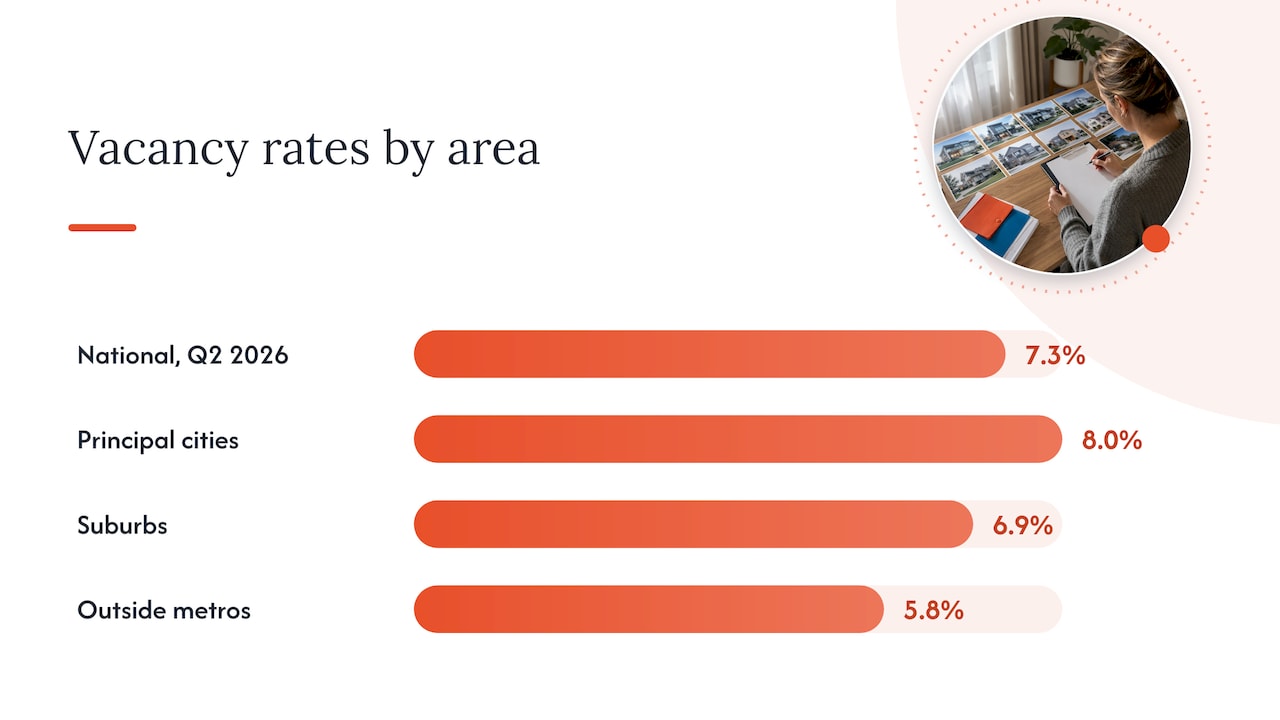
- The national rental vacancy rate was 7.3 percent in Q2 2026, so many owners now compete for residents instead of waiting for them.
- Price to current comparable listings, count concessions as part of rent, and reprice on a schedule rather than on a hunch.
- Fast turns and early renewals beat advertising spend: a clean-and-paint turn can take 2 to 3 days, while neglected units take weeks.
- Preventing an avoidable eviction or move-out is often cheaper than refilling the unit.
Table of Contents
- Start by measuring vacancy the right way
- What the market is telling you right now
- Lever 1: Price to the market, not to your mortgage
- Lever 2: Cut the make-ready time
- Lever 3: Keep good residents longer
- Lever 4: Screen for fit, then market with clear criteria
- Lever 5: Time your listings and plan for the season
- If a unit stays empty anyway
- Our perspective: vacancy is a systems problem
- Where a property manager fits in
- A 30-day vacancy action plan
- FAQ
- Sources
Start by measuring vacancy the right way
The standard formula is simple: divide vacant units by total units and multiply by 100. Ten rental homes with one empty is a 10 percent vacancy rate. That number is a snapshot, and it hides what you can change.
Track three more figures for every unit:
- Days vacant per turnover. From the day the old resident hands over keys to the day the new lease starts.
- Turnover frequency. How many units turned over in the last 12 months.
- Cost per vacant day. Monthly rent divided by 30, plus carrying costs such as utilities, lawn care and insurance.
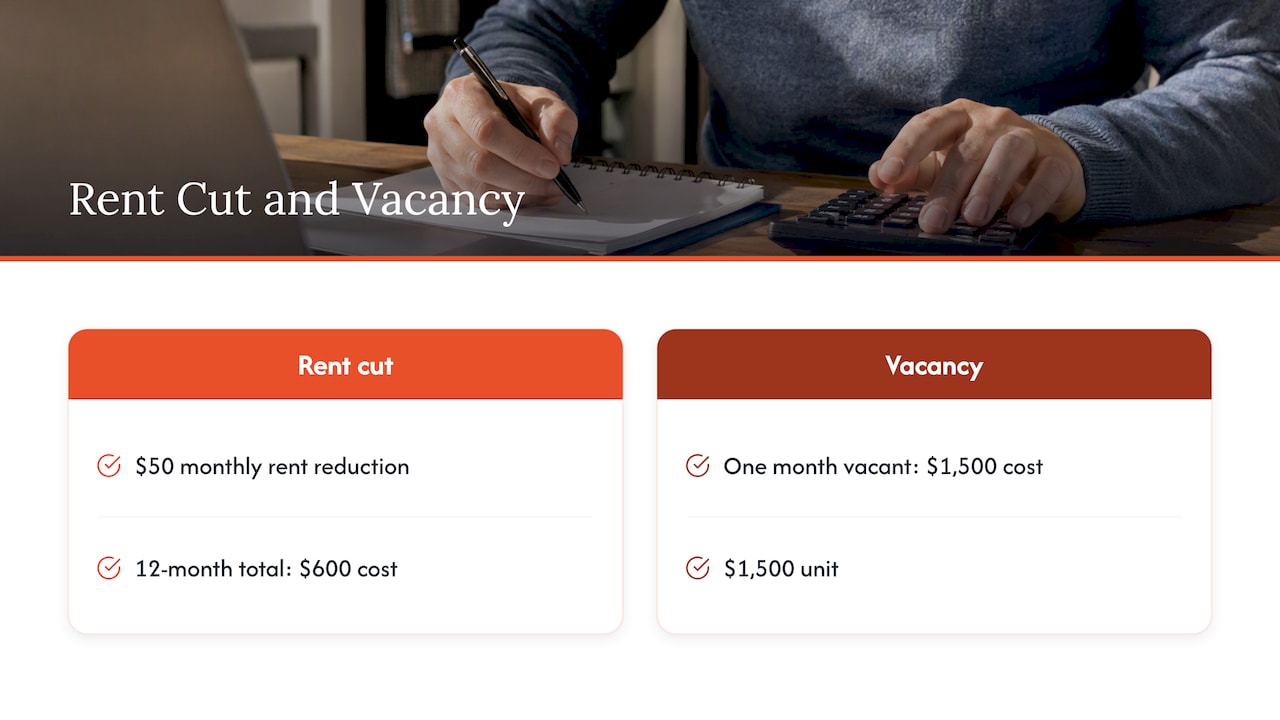
A unit renting for $1,500 a month that sits empty for 30 days costs you $1,500 in rent before you count a dollar of cleaning, paint or marketing. Cutting that to 15 days saves half of it, every turn. Multiply by the number of units you own and the number of turns per year, and you can see where effort pays.
Keep move-out records for 12 to 18 months. HUD’s maintenance guidance for housing administrators recommends tracking move-out records over that period so you can anticipate seasonal swings and schedule crews and vendors before the rush. Leases that all expire in December create a vacancy problem you built yourself.
What the market is telling you right now
The national rental vacancy rate was 7.3 percent in the second quarter of 2026, according to the Census Bureau’s quarterly release, against 7.0 percent a year earlier. Tracking by the St. Louis Fed’s FRED series shows the same 7.3 figure, with the next release due October 28, 2026.
A national number only goes so far. Realtor.com found that the average rental vacancy rate across the 50 largest metros reached 7.6 percent in 2025, and it describes the market as renter-friendly. Analysts generally treat 5 to 7 percent as balanced. Above that, residents have leverage: they can negotiate, compare, and walk away.
Supply explains much of the difference between cities. RealPage’s forecast notes that markets with a recent construction boom are still absorbing new units and often use concessions to stay competitive, while supply-constrained coastal hubs keep seeing rent growth. In its first-quarter outlook, RealPage projected rent cuts in nine markets for 2026, with Houston among the steepest at -1.5 percent.
What this means for you:
- In a soft market, the unit that rents fastest is the one priced correctly on day one, not the one with the cleverest listing.
- Newer apartment communities are your real competition, even if you own a single-family home. Residents compare monthly cost and features across property types.
- Your submarket matters more than the headline figure. A rate for principal cities (8.0 percent in Q2 2026) differs from suburbs (6.9 percent) and areas outside metros (5.8 percent), per the Census Bureau data.
We see this locally in Dallas-Fort Worth, where we have written about why rental owners cannot rely on demand alone.
Lever 1: Price to the market, not to your mortgage
The most common cause of a long vacancy is an asking rent set by what the owner needs or what the unit rented for two years ago. Residents do not know your costs. They see comparable listings.
Build a comp set. Pull 5 to 8 active listings within a short drive, with similar bedrooms, bathrooms, condition and parking. Active listings tell you what you compete with today. Old lease data tells you what happened earlier.
Count concessions as rent. A listing at $1,750 with one month free is closer to $1,604 per month over a 12-month lease. If nearby apartments offer concessions, a flat price on your house can look expensive even when the sticker rent is lower.
Set a repricing schedule. For example: if a unit has few inquiries after two weeks, adjust the rent or the presentation before week three. Waiting for the perfect applicant at a high rent has a price, because each empty day is lost income you cannot recover.
Compare the two choices. A $50 monthly reduction costs $600 over a 12-month lease. A month of vacancy on a $1,500 unit costs $1,500. Giving up a little rent to fill quickly often wins, especially when the lower rent still sits within the market range.
Lever 2: Cut the make-ready time
Vacancy is often a maintenance problem in disguise. The HUD maintenance guide describes a routine clean-and-repaint vacancy that can be turned in 2 to 3 days, while a vandalized unit can take 3 to 4 weeks. The gap between those two is mostly planning.
What shortens a turn:
- Pre-move-out inspection. Walk the unit when notice is given, not after keys come back. Order flooring, appliances and paint supplies while the resident is still there.
- Standard finishes. One paint color and one flooring type across a portfolio means you can order in advance and any crew can touch up any unit.
- Scheduled vendors. Line up cleaning, paint, and repairs in sequence so no trade waits on another.
- A named owner of the turn. One person responsible for the unit until it is rent-ready.
HUD’s guidance goes further for properties in trouble. It recommends a Rapid Reoccupancy Program: assign a coordinator to treat filling units as the top priority, and accept a compromise on cosmetic finishes where needed, while never dropping below minimum habitability standards. Private owners can borrow the idea. A scuffed baseboard should not hold a lease start by a week. A broken water heater should.
This is one reason we keep maintenance in-house and organize teams into pods: the people who know the unit and the vendor schedule are the same people who own the turn. Our rental turnover cost breakdown shows where the $1,000 to $5,000 of a typical turn goes.
Curb appeal and the first 30 seconds
People decide whether to book a showing from photos and the street view. Fix what shows: peeling paint at the entry, a cracked driveway, an unkempt yard. Hard surfaces are a common trouble spot for owners in hot climates, and long-term paving maintenance can protect both appearance and resident satisfaction at community properties. Shoot photos in daylight, show every room, and include the kitchen and any outdoor space.
Lever 3: Keep good residents longer
The fastest way to fill a unit is to not empty it. Every renewal removes the vacancy, the make-ready, the marketing and the leasing work in one move.
HUD-sponsored research on multifamily housing points to resident retention and management responsiveness as key levers for property performance, because turnover and unit preparation are costly. Practical steps:
- Respond to maintenance requests quickly. A resident whose repair took three weeks is already browsing listings.
- Start renewals 90 to 120 days out. Waiting until 30 days before expiration leaves too little time to negotiate or to list the unit if the resident leaves. We lay out the approach in our lease renewal strategy.
- Offer a fair renewal, not the maximum. A modest increase on a good resident is usually cheaper than a month of vacancy plus turnover costs.
- Communicate before problems. Notices about maintenance, inspections and policy changes build trust.
- Make small improvements that residents value. Reliable appliances, good filters, and safe lighting matter more than cosmetic extras.
For more on this, see our tenant retention tips.
When a resident falls behind
Eviction is the most expensive way to lose a resident. HUD USER notes that vacancy from an eviction often costs landlords at least two months of lost rent, and that turnover costs can total up to 18 percent of potential annual gross rent.
The Consumer Financial Protection Bureau suggests that renters and landlords start a conversation about a repayment plan early, and notes some state and local programs support this. Options include splitting rent to match paydays or waiving a late fee in exchange for a written schedule. Residents who need outside help can be pointed to the CFPB’s page on getting help paying rent and bills, which recommends contacting 211 or a HUD-approved housing counselor.
Get any payment plan in writing and review it with your property manager or attorney, because landlord-tenant rules differ by state. A plan does not suit every situation, but when the resident has a good record, it is often the cheaper path.
Lever 4: Screen for fit, then market with clear criteria
Screening protects vacancy in two ways. A resident who pays and stays reduces future turnover, and a resident who does not pay creates the longest vacancies of all. Set written criteria (income multiple, rental history, credit and background standards) and apply them to every applicant the same way. Consistent criteria also help you stay within fair housing rules. Check federal, state and local requirements, or work with a manager who does.
Put those criteria in the listing. It saves showings for people who will not qualify and speeds up the process for those who will.
Then shorten the path from inquiry to lease:
- Respond to inquiries the same day. Interested renters contact several listings at once.
- Offer self-guided or flexible showing times.
- Accept online applications and decide within a stated window.
- Have the lease ready to sign as soon as an applicant is approved.
If you need a concession, make it targeted: a reduced first-month rent, a waived application fee, or a free parking spot for slower months can work better than a permanent rent cut, because it keeps the base rent intact for renewal.
Lever 5: Time your listings and plan for the season
Rental demand has seasons. Leases that end in the slow months are harder to fill, and moves tend to cluster around summer and school calendars. Use your move-out records to avoid expirations in your weakest months. When you sign a new lease, adjust the term by a few months so it ends when demand is stronger.
We cover the preparation side in our guides to leasing season for property managers and property management tips for leasing season. The idea is the same in both: have units rent-ready, photographed and priced before the busy weeks begin, not after.
If a unit stays empty anyway
Some vacancies run long even with good execution. A property that sits empty for weeks carries risks beyond lost rent. Many standard homeowner and landlord policies limit coverage after a period of vacancy, so ask your agent what applies to your policy and what a vacancy permit insurance option would involve before the deadline in your policy arrives. Keep utilities on, check the property regularly, and keep the lawn and exterior maintained so it does not look abandoned.
If the unit has been listed for a month or more with no result, do not just wait. Change one thing at a time: the price, the photos, the listing description, or the condition. Then give it a week and look at inquiries again.
Our perspective: vacancy is a systems problem
After more than 15 years and about 2,700 properties served across 10 regional markets, we see the same pattern. Owners blame the market when a unit sits, and sometimes they are right. More often the vacancy comes from a slow turn, a rent set without current comps, or a renewal conversation that started too late.
Three things matter most in our approach.
One team that owns the outcome. Our pod-based structure means the people leasing a home, coordinating maintenance and talking to the resident work together. Nobody waits for a handoff while the clock runs on an empty unit.
In-house maintenance and transparent vendor selection. A turn is a sequence of small jobs. When we control the crew and are open about how vendors are chosen, owners know what they are paying for and the unit moves faster.
Retention as a vacancy strategy. We treat a good resident as the most valuable asset in a lease. Proactive communication and early renewals reduce the number of units we have to refill at all.
The point for an owner is that vacancy is not luck. It is a set of decisions you can measure, and each one is cheaper to fix than the month of rent it costs.
— MediaBeast
Where a property manager fits in
You can do every step above yourself if you have the time, local pricing knowledge and a reliable vendor bench. Many owners find the hard part is speed: showing a unit on a Tuesday evening, getting a painter on site the day after move-out, and starting renewals four months ahead for each lease.
Our property management services cover leasing and tenant placement, maintenance, and resident relations, with technology to keep tasks moving. If you own multiple units or are building a rental portfolio, our asset management team looks at the numbers across properties, and our multifamily and build-to-rent services support larger holdings. We operate in Charleston and Columbia, SC; Fort Worth and Dallas-Fort Worth, Houston, TX; Kansas City and Overland Park; and Jacksonville and Jacksonville Beach, FL. You can also read our own tips for minimizing vacancy rates.
A 30-day vacancy action plan
| Week | Action | Result to look for |
|---|---|---|
| 1 | Calculate days vacant and cost per vacant day for each unit; list lease end dates by month | A clear picture of which units and months cost you most |
| 2 | Pull current comps; reset rents that are above the market; write screening criteria | Prices that match active listings |
| 3 | Standardize make-ready: finishes, vendors, a checklist and a named owner | Shorter turns |
| 4 | Schedule renewal outreach 90 to 120 days before each lease ends | Fewer surprise move-outs |
Repeat the numbers every quarter. If days vacant fall and renewals rise, the vacancy rate follows.
FAQ
What is a good vacancy rate for a rental property?
Industry analysts generally treat 5 to 7 percent as a balanced rental market, and Realtor.com’s research frames rates above that as renter-friendly. For your own properties, a good rate is one at or below your local submarket. Check both the rate and your average days vacant per turn.
How long should it take to re-rent a unit?
It depends on the market, price and condition, so compare yourself against your own history and local listings. A straightforward clean-and-paint turn can be done in 2 to 3 days, per HUD’s maintenance guidance, so most of the delay is usually in scheduling, pricing and showings.
Is there a 2% rule for rental vacancy?
No official guidance sets a 2 percent rule for vacancy. The term is more often used as an investor rule of thumb about rent compared with purchase price, and it is not a standard to measure vacancy against. Use your local vacancy rate and your own turnover data instead.
Should I lower the rent or offer a concession?
If your rent is above comparable listings, adjust it. If the market is temporarily slow and your rent is in range, a one-time concession such as a reduced first month can fill the unit while keeping the base rent for renewal. Compare either option with the cost of another month empty.
Sources
- Quarterly Residential Vacancies and Homeownership, Second Quarter 2026 (U.S. Census Bureau)
- Rental Vacancy Rate in the United States (FRED, St. Louis Fed)
- January 2026 Rental Report (Realtor.com Economic Research)
- RealPage Analytics, 2Q 2026 forecast
- RealPage, U.S. Apartment Market Forecast 1st Quarter 2026
- Managing Maintenance in Public Housing (HUD)
- Multifamily property performance (HUD USER)
- How Preventing Evictions Benefits Landlords (HUD USER)
- Start a conversation about rent repayment (CFPB)
- Get help paying rent and bills (CFPB)