Skip to content

What South Carolina’s Population Boom Means for Real Estate

This week’s blog is brought to us by Market Director Claudia Gibson!


South Carolina is experiencing a population boom unlike anything seen in decades—and it’s not slowing down anytime soon. According to recent data highlighted by Fox News, the Palmetto State has officially become the fastest-growing state in the nation, driven largely by an influx of people relocating from other parts of the United States.  

A Record-Breaking Surge 

Between July 2024 and July 2025, South Carolina’s population grew by 1.5%, outpacing every other state in the country.  
Even more telling is how that growth is happening: 

  • Over 66,000 new residents moved into the state from elsewhere in the U.S. in just one year  
  • Nearly 80,000 total new residents were added during that same period  
  • A previous spike saw 100,000+ new residents in a single year (2022–2023)  

This surge is not being driven by international migration or birth rates—it’s people choosing South Carolina on purpose

Why Everyone Is Moving to South Carolina 

So what’s fueling this migration wave? 

1. Affordability & Cost of Living 
Compared to states like New York and California, South Carolina offers significantly lower housing costs and taxes, making it attractive for both families and retirees. 

2. Job Growth & Economic Expansion 
Cities like Columbia and Greenville are seeing growth in healthcare, manufacturing, and tech industries, creating new opportunities for workers.  

3. Lifestyle & Climate 
From coastal living in Charleston to quieter suburban and rural communities, the state offers a mix of lifestyle options with a generally mild climate. 

4. Remote Work Shift 
The post-pandemic workforce has changed where people choose to live—many are leaving expensive urban centers for more space and value in states like South Carolina. 

Growth Isn’t Even—It’s Concentrated 

While the entire state is growing, the majority of that growth is happening in key areas. More than 80% of population gains since 2020 have been concentrated in just ten counties, including: 

  • Charleston  
  • Greenville  
  • Lexington  
  • Richland  
  • Horry  
  • York  

This means urban and suburban hubs are expanding rapidly, while some rural areas are seeing slower growth. 

A Bigger National Trend 

South Carolina’s rise is part of a larger shift happening across the U.S. 

While overall U.S. population growth slowed to just 0.5% between 2024 and 2025, southern states continue to dominate growth due to domestic migration.  

Americans are increasingly “voting with their feet,” leaving higher-cost states and relocating to more affordable regions in the Southeast.  

What This Means for Real Estate & Communities 

For someone like you—deep in property management and real estate—this trend is huge. 

1. Increased Housing Demand 
More people moving in = more demand for rentals and home purchases. Expect continued pressure on inventory and pricing. 

2. Rising Property Values 
Growing populations often drive appreciation, especially in high-demand counties. 

3. Infrastructure Pressure 
Rapid growth can strain roads, schools, and utilities—creating both challenges and opportunities for development. 

4. Shifts in Tenant Demographics 
With newcomers arriving from higher-cost states, expectations around service, amenities, and pricing may evolve. 

The Bottom Line 

South Carolina isn’t just growing, it’s transforming. 

With strong domestic migration, expanding job markets, and an attractive cost of living, the state has positioned itself as a top destination for Americans seeking opportunity and lifestyle. But with that growth comes responsibility: managing infrastructure, housing supply, and community development will be key to sustaining this momentum. 

For real estate professionals, investors, and business owners, one thing is clear: 

South Carolina isn’t just on the map—it’s becoming the destination.

Why Americans Are Leaving and Where They’re Landing

This week’s blog is brought to us by our Market Sales Manager for our Greenville Market, Ivan Jenkins!


Policy-Driven Exodus to the Southeast’s Promised Land

Tracking the moving trucks heading south of the 36°30’N parallel, you aren’t just seeing people changing zip codes; you’re witnessing a massive financial migration that is reshaping the American landscape in ways that are almost a direct reversal of the population flows that defined 20th-century America.   

Frankly, the numbers are staggering, and people fleeing high-tax states at this pace should make any real estate board sweat.  New York experienced an approximate net loss of 114,000 domestic residents in a single year. (Fox News, April 2026) California alone is shedding about 229,000 residents annually to other states. (Coastal Moving Services, 2025). It isn’t hard to see why when anyone who can use a calculator sees the math.  New Jersey has an average property tax bill of $9500 or 2.23% annually. (MoneyTalksNews, 2026).  When you look at IRS migration data, it confirms that billions of dollars in adjusted gross income aren’t just “lost” to these states; they’re physically relocated to more competitive markets.   

So, where is all that capital heading?  It’s flooding into the Sunbelt, specifically the Southeast.  

Florida has grabbed the headlines for years and still attracts the largest share of income migration, with $36 billion in annual net income inflows, but the real story lies north of the hurricane magnet, Sunshine State. (Fox News, April 2026) South Carolina, North Carolina, and Tennessee are now posting record in-migration gains as the Florida peninsula plateaus. South Carolina, specifically, ranked second in the nation for inbound moves in 2025 according to the 2025 North American Van Lines migration study. North Carolina attracted nearly 140,000 net new residents in 2024 alone (MoneyTalksNews, 2026).  These states are no longer just retirement or spectator destinations; they are the nation’s new economic engines.  

For real estate professionals, these migration trends are significant beyond just population counts.  Savvy investors, brokers, and practitioners recognize that people leaving New York, New Jersey, and California aren’t leaving broke. They’re smuggling in equity from markets where the median home price can be $800,000 or more. California’s median home price is $809,227 (Coastal Moving Services, 2025), and they’re arriving in Southeast markets where that same money buys something twice the size at a fraction of the carrying cost, or it buys multiple investment properties at cap rates twice their previous markets with equity to spare. This creates a buyer profile with cash or a significant down payment, with purchasing power that doesn’t require maximum leverage to close.  

The Southeast isn’t stumbling into this position by accident.  South Carolina’s effective property rate for owner-occupied homes is less than 0.50% annually, amongst the lowest in the country. (MoneyTalksNews, 2026).  South Carolina’s tiered property tax rate makes this rate higher for non-owner-occupied properties. North Carolina’s flat income tax rate dropped to 3.99% in 2026. (Money Talks News, 2026) Tennessee has no state income tax.  These aren’t coincidences; they’re results of policy and strategic design. They’re producing migration influx outcomes that were expected.  

How does the money move?  The question for every real estate professional or investor in this region is whether you’re positioned in front of it.

End of 2025 Jacksonville Market Overview

This week’s blog comes to us from our Residential Experience Manager for our Jacksonville market, Taylor Moore.


As we close out 2025, Jacksonville continues to present a market defined less by short-term volatility and more by long-term fundamentals that remain relevant to residential investors. 

Jacksonville Market Overview 

Jacksonville has remained a consistent destination for in-migration over the past several years, driven by a combination of relative affordability, job growth, and quality-of-life factors. While transaction activity across the broader housing market has moderated compared to recent peak years, underlying demand for housing — particularly rental housing — continues to be supported by population growth and economic diversification. 

Major Investments & Development Signals 

Several large-scale initiatives underway or advancing through planning stages point to continued confidence in Jacksonville’s future: 

  • Downtown redevelopment, including the planned modernization of the Jaguars’ stadium, represents a significant public-private investment in the city’s urban core. 
  • Park, riverfront, and infrastructure improvements continue to enhance livability and long-term market appeal. 
  • The expansion of the University of Florida’s Jacksonville campus is expected to bring additional students, faculty, researchers, and healthcare professionals to the area over time, further diversifying the local employment base and housing demand. 

These projects are not short-term market drivers but rather signals of sustained commitment to Jacksonville’s growth trajectory. 

Rental Housing Context 

As the for-sale market has adjusted in response to interest rate conditions, demand for quality rental housing remains steady. Newer build-for-rent communities are positioned to benefit from: 

  • Households seeking flexibility 
  • Renters priced out of homeownership 
  • In-migrants prioritizing location, layout, and move-in readiness 

This environment continues to support well-designed, professionally managed single-family rental communities. 

Cedar Creek Estates 

Within this broader market context, Cedar Creek Estates reflects the type of product increasingly favored by today’s renter demographic: new construction homes with functional layouts, private outdoor space, and proximity to employment corridors and daily conveniences. 

Rather than relying on speculative growth assumptions, the community’s positioning aligns with Jacksonville’s steady population growth, expanding employment base, and evolving housing preferences. 

Looking Ahead 

As we move into 2026, Jacksonville remains a market to watch for investors focused on long-term fundamentals. While broader economic conditions will continue to influence short-term performance, continued institutional investment, educational expansion, and demographic trends provide a stable backdrop for residential rental assets.

Want to stay in the loop? Subscribe through Tyson’s LinkedIn to get his blog posts delivered straight to your inbox!

Join the Auben Realty Community!

Get the best real estate news from Auben Realty.

Alt

Why Human-Centered Service Still Matters in a Tech-Driven Rental World

This week’s blog comes to us from our Market Director for Kansas City and Texas, Brandie Mejia.


The multifamily industry is in a constant state of evolution. Technology, automation, and AI-driven tools have rapidly reshaped how prospective and current residents interact with property management teams. The recent GlobeSt. article, “From Move-In to Renewal: How Experience-Led Operations Keep Residents,” highlights this shift and makes several strong points about the need for transparency, convenience, and connection throughout the resident lifecycle.

And while much of that insight rings true, there’s a critical piece of the conversation that is rarely emphasized: the irreplaceable value of real, human customer service.

Because despite the rise of automation, people still want people.

According to a recent national online survey, 93.4% of people prefer to interact with a live person—not an automated system—when they need help or want information. This isn’t a small statistic. It’s a massive signal that in an increasingly digital world, human connection isn’t just appreciated… it’s expected.

The Customer Service Crisis

Think about the last time you personally had a great customer service experience:

  • A time when you were out shopping
  • A meal where the service felt exceptional
  • A moment when a customer service representative on the phone truly helped you

If you’re like most people, those moments are few and far between.

And that scarcity is exactly what makes authentic, human interaction so valuable today.

In property management—especially in single-family and multifamily rentals—the stakes are even higher. A resident isn’t buying a burger or returning a pair of shoes. They’re trusting you with their home, their family’s safety, and their biggest monthly expense.

Technology can support that relationship, but it cannot replace it.

The First Touchpoint Matters More Than Ever

One of the most important takeaways from the GlobeSt. article is that the “resident experience” doesn’t begin on move-in day—it begins at first contact.

And this is where the industry has drifted too far into automation.

We’ve created self-showing locks, automated follow-ups, chatbot leasing agents, and digital-only move-in experiences. While these tools have value, they must be used to enhance the resident journey—not replace the human component.

Imagine the difference if…

  • The resident was greeted in person at move-in
  • Or, if distance prevents that, they had a live FaceTime or Teams call with their manager
  • Someone walked them through the property, helped them locate utilities, answered questions, and ensured they felt supported from day one

That single interaction sets the tone for the entire tenancy.

It builds trust, reduces move-in issues, and ultimately increases renewal likelihood. Residents who feel personally taken care of are significantly more likely to stay—no automated system can duplicate the warmth and reassurance of real human engagement.

Experience-Led Operations: A Human-First Approach

The article emphasizes how experience-led operations can drive renewals. I agree—but I believe the modern definition of “experience” needs to shift.

It’s not just about smooth online portals or automated reminders.

It’s about personalized, relationship-centered service at every stage:

1. First Contact

A real person responding quickly, answering questions thoroughly, and creating rapport.

2. The Showing

Even if the industry leans on self-showings, we can still insert human moments:

  • Live virtual tours
  • Welcome calls
  • Follow-up texts from a real team member

3. Move-In Support

Meet them onsite—or greet them virtually if distance is a factor.
This is often the step that makes or breaks a resident’s long-term perception.

4. Ongoing Maintenance Communication

Most residents don’t get frustrated by the repairs—they get frustrated by lack of communication.

A phone call instead of an automated message can change everything.

5. Renewal Time

Renewals should never feel transactional. Residents stay where they feel valued.

The Future of Resident Experience: Tech + Humanity

AI and automation should continue to support efficiency. They absolutely have their place.
But the future of exceptional property management belongs to companies who use technology as a tool—not a replacement—for human interaction.

Those who bring back:

  • Empathy
  • Connection
  • Human follow-through
  • Personal service

These will be the teams who stand out in 2025, 2026, and beyond.

Because the data is clear — 93.4% of people still prefer a real human.

And in housing, that preference becomes a need.

Final Thought

If we want to elevate the resident experience—from inquiry to renewal—we must lead with human connection first. Technology should enhance the experience, but it should never replace the warmth, care, and accountability that only a person can provide.

In a world where customer service feels increasingly rare, the companies who bring it back will be the ones who win.

Want to stay in the loop? Subscribe through Tyson’s LinkedIn to get his blog posts delivered straight to your inbox!

Join the Auben Realty Community!

Get the best real estate news from Auben Realty.

Alt

Why My New Role Is All About Making Multi-Market Investing Easier

This week’s blog comes to us from our National Sales Development Manager, Chris DeTreville.


When I first got into real estate straight out of college, my world was one market, one neighborhood at a time. Today, more and more of our clients are thinking very differently:

“I like Columbia, but I also want exposure to Chattanooga.”

“I’m selling in Augusta to rebalance into Kansas City.”

“I’d like one team that understands my whole portfolio, not just one zip code.”

That shift is exactly why I’m excited about my new role as National Brokerage Sales Manager at Auben. My job is simple to describe, but big in practice: make multi-market investing easier and more efficient for buyers and sellers who want to be active in multiple markets as one aligned team.


What I’m Seeing From Investors Right Now

Whether you’re buying your first SFR or repositioning a 100-door portfolio, a few themes keep coming up in conversations:

  • You want diversification across markets—but not five different playbooks.
  • You’re tired of re-explaining your strategy every time you talk to a new agent.
  • You care about the back end (property management, turns, leasing) just as much as the front-end purchase price.

My background is in both sales and property management, and those years on the back end permanently changed the way I look at deals. I’ve seen what happens after closing when expectations weren’t aligned—or when the right questions never got asked. That 360° view is what I’m bringing into this national role.


One Strategy, Many Markets

At Auben, we’re in multiple markets across the Southeast and beyond, and each one has its own personality—different rents, different tenant bases, different operator nuances.

My goal isn’t to flatten those differences. It’s to connect them under a common strategy so your experience feels like this:

  • One playbook. Clear buy boxes, return targets, and risk tolerances that our agents reference in every market you touch.
  • One language. Whether you’re looking at Columbia, Kansas City, or Jacksonville, you’re not decoding a new set of terms, pro formas, or expectations each time.
  • One relationship. A core point of contact who understands your history, preferences, and portfolio—then plugs you into the right local specialist when you need boots on the ground.

Behind the scenes, that means better internal communication, shared data, and training so our team isn’t just operating in silos by city, but as one brokerage focused on investors.


Making Buying Across Markets Smoother

Here are a few ways we’re working to improve the experience for buyers active in multiple markets:

  • Aligned deal flow: Instead of sending random listings, we’re tightening how we filter opportunities so you see deals that really match your criteria—no matter which Auben market they’re in.
  • Comparable, investor-focused underwriting: We’re leaning into consistent analysis so you can compare a Columbia duplex and a Chattanooga SFR on apples-to-apples terms.
  • Clear expectations on operations: From estimated turns to likely rent ranges and management considerations, we’re integrating the property management view earlier in the process so there are fewer surprises after close.

If you’ve ever tried to piece together a multi-market strategy using five different brokerages and three different management companies, you already know how valuable that consistency can be.


Serving Sellers With Portfolios That Cross State Lines

On the sell side, things get even more complex—and that’s where a multi-market investor brokerage can really earn its keep.

When we help owners sell portfolios, we’re not just asking, “What’s your price target?” We’re talking through:

  • Which assets you truly want to exit—and which you may want to hold or 1031.
  • How timing in one market affects capital you might want to redeploy elsewhere.
  • The emotional side of selling a portfolio you’ve built over years—long-term vendors, tenant relationships, and pride of ownership.

My job in this new role is to make sure we can:

  • Package and present portfolios in a way that resonates with buyers who are also thinking multi-market.
  • Coordinate across cities so due diligence, access, and communication don’t become a tangle of conflicting calendars and processes.
  • Match the right buyer to the right portfolio, whether they’re looking to deepen in one market or use your sale to plant a flag in several.

You shouldn’t feel like you’re herding cats every time you decide to sell across more than one city. We want to take that off your plate.


Where AI and Best Practices Fit In

At IMN’s Single Family Rental conference in Scottsdale, I spoke on a panel about using AI and best practices to optimize property management, marketing, and turn. That topic ties directly into what we’re building on the brokerage side.

To be clear, I don’t believe AI replaces relationships or judgment—but it can help us:

  • Spot patterns in your portfolio performance across markets.
  • Surface the most relevant deals faster.
  • Standardize communication and workflows so your experience feels consistent, even as you scale.

The goal is not “tech for tech’s sake.” It’s using tools in the background so that, on your end, things feel simpler, clearer, and more predictable. 


What This Means for You

If you’re:

  • A buyer looking to grow in more than one market,
  • A seller thinking about bringing a multi-market portfolio to market, or
  • An institutional or boutique fund looking for a partner who understands both brokerage and property management…

…I’d love to talk.

We’re still refining and improving our systems every week, but the north star is clear:

Make it easier for serious investors to buy, sell, and operate across multiple markets with one trusted team.

If that’s the experience you’ve been looking for, let’s connect and see how we can put Auben’s multi-market platform to work for you.


Want to stay in the loop? Subscribe to Tyson’s LinkedIn newsletter to get his blog posts delivered straight to your inbox!


Featured Articles

States Move to Rein in Apartment Landlord Fees

Less landlord fees for tenants…

Buying Vs. Renting A Home: Which Is Right For Your Wallet And Lifestyle?

Buying vs. Renting is not always an easy question…

2026 Housing Market Set for Big Rebound

Housing expected to rebound…

THE APPEAL OF BUILD-TO-RENT

Appeal of build-to-rent…

The Stress Test of Scaling

“No matter the question, the private equity answer is always the same: Does it scale? 
Common Principle in Growth & Operations 

When I think about where Auben is today, I keep returning to a simple truth: investors look at returns, comps, cap rates, and structures — but what truly drives long-term performance is the operator’s ability to grow under stress

And right now, we are in one of those stress-test seasons. 

Not a crisis. 
Not a setback. 
A stress test — the kind that shows whether the systems, people, and leadership structures we’ve built are capable of supporting what comes next. 

I have been through versions of this before. And every time, I’m reminded that growth doesn’t feel good — even when it is good. 

Why Growth Feels Hard — Even When It’s Right 

In a business like ours — where Property Management, Project Management, Maintenance, and Sales all have to work in sync — growth isn’t clean. It introduces friction: 

  • More doors 
  • More processes 
  • More systems 
  • More people 
  • More expectations 

Everyone feels that strain differently. 
Some weather it with a slight sway. Others feel like they’re underwater. 

Both are valid. Both matter. 

Mindset becomes the differentiator. 

“If you think you can or you can’t, you’re right.” 
Donald Caster, on growth mindset 

That quote has stuck with me. I’ve lived it. We don’t get to choose whether growth is uncomfortable, but we do get to choose how we show up inside the discomfort. 

The “No Man’s Land” Framework: What We’re Asking Ourselves Right Now 

I’ve been reading No Man’s Land, a book about what happens when a business leaves “small” but hasn’t yet entered “scalable.” 

It lays out six questions that I’ve been asking myself — and asking our teams: 

  1. What are we truly great at? 
  1. What do we offer that is genuinely unique? 
  1. Are we growing based on capability or promises? 
  1. Are we spending time cleaning up complexity we created? 
  1. Which customers belong in our future — and which don’t? 
  1. How do we simplify execution so our value proposition stays consistent and clear? 

For me, #6 is the one that keeps me up at night. 

Because simplifying how we communicate and how we execute is the difference between a company that grows with intention and one that grows into chaos

Simplification: The Edge Most Operators Ignore 

I’ve learned the hard way that complexity is a margin-killer. 
It slows execution, creates confusion, and fractures teams. 

So our focus right now is simple: 

  • unify communication 
  • build repeatable workflows 
  • tighten roles and responsibilities 
  • reduce handoffs 
  • increase cross-functional clarity 
  • define market-by-market expectations 
  • standardize wherever possible 

This isn’t just “operations.” 
This is value creation

“Simplification is not a luxury — it is a prerequisite for durability.” 
ACP Operating Thesis 

I believe that wholeheartedly. 

The Moment We’re In 

We are stepping into one of the most aligned growth windows Auben has ever had: 

  • a new enterprise website 
  • an evolving operating system 
  • deepening integration across service lines 
  • several large M&A conversations underway 
  • expanding market leadership 
  • a sharper understanding of the customers we want to serve 
  • a company-wide commitment to operating excellence 

This is not a resting point — it is a turning point. 

We’re not trying to become a bigger version of what we’ve been. 
We’re building the platform we were meant to become. 

People Are the Engine 

Behind every metric — every unit, every rehab, every service request — is a person experiencing this growth cycle in real time. 

So I’m asking our teams directly: 

“What do you need to thrive during this phase of growth?” 

The goal isn’t to grow at people — it’s to grow with them. 

Strong operators build strong teams. 
Strong teams build strong systems. 
Strong systems deliver durable returns. 

Looking Ahead 

Growth at Auben has never been accidental. 
It comes from discipline, clarity, and an unapologetic willingness to evolve. 

As we move forward, our focus is clear: 

  • Grow with discipline 
  • Support the people doing the hard work 
  • Simplify wherever possible 
  • Integrate across all operating functions 
  • Deliver consistent, repeatable outcomes in every market 

That’s how we build something durable. 
That’s how we create real value. 
That’s how operators become platforms — and platforms become category leaders. 

Closing Perspective 

“After my greatest struggles have come my greatest successes.” 

Auben was born in one of the hardest seasons of my life. 
What felt like failure was actually the beginning. My wife helped me understand that. 

And today, I believe we are standing at another one of those inflection points. 

This stress test is not a breaking point. 
It’s preparation — the strengthening of our systems, our people, and our ability to deliver long-term value for those who trust us. 

We’re building something that lasts. 
And we’re doing it together.


Want to stay in the loop? Subscribe to Tyson’s LinkedIn newsletter to get his blog posts delivered straight to your inbox!


Featured Articles

Job Gains Accelerate in These Cities, Reshaping CRE Demand

Incredible job growth in Dallas and elsewhere…

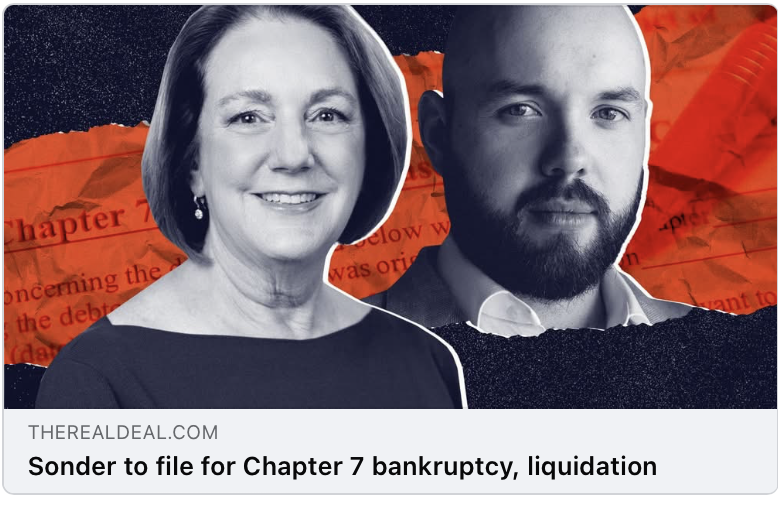
Sonder to File for Chapter 7 Bankruptcy, Liquidation

Could Sonder bankruptcy create opportunity for assets for reposition?

CoStar Warns Multifamily Downturn Deeper Than Expected

Multifamily downturn expected to be deep…

Building Connections and Gaining Insights in Kansas City

This past Tuesday, I had the pleasure of attending both the ACA and MAREI meetings in Kansas City. It was a full day packed with valuable conversations, insightful takeaways, and incredible networking opportunities.

At ACA, I connected with a wide range of investors, vendors, and industry experts. It’s always energizing to be surrounded by professionals who are passionate about shaping the future of real estate—especially those who are eager to collaborate, share knowledge, and grow together. The conversations were not only informative but also inspiring, reminding me of just how many different paths and strategies exist within this dynamic industry.

The evening MAREI meeting was another highlight. The roundtable setup was both innovative and highly effective. Each table featured an expert in a specific facet of real estate investing, creating a dynamic environment where attendees could ask targeted questions, share their goals, and receive real-time guidance from seasoned professionals. Whether you were just starting your investing journey or looking to scale your portfolio, there was something to gain at every table.

What stood out most from the day was the quality of the networking. I made many new connections, each one opening doors to potential partnerships, shared resources, and business referrals. It was more than just a chance to exchange business cards—it was about building meaningful relationships with people who are aligned in values, goals, and vision.

As always, I left feeling grateful to be part of such a collaborative and forward-thinking community. I’m looking forward to staying in touch with the many new friends I met and seeing how we can support one another in the months to come.

Connect with Alli if you have any questions or if you are looking for investment opportunities in the Kansas City or Texas region!

Want to stay in the loop? Subscribe through Tyson’s LinkedIn to get his blog posts delivered straight to your inbox!

Join the Auben Realty Community!

Get the best real estate news from Auben Realty.

Alt

Alex’s Takeaways from IMN’s 2025 Build-to-Rent Forum East

The Build-to-Rent (BTR) industry has garnered considerable attention recently, with significant discussions about its growth and challenges. The Build-to-Rent East Conference provided an excellent platform for exploring the key trends and challenges shaping the industry. Let’s explore the highlights from the event and what lies ahead for this rapidly evolving sector.

A Positive Outlook for the Future of Build-to-Rent

Despite the current challenges, there’s an overarching sense of optimism surrounding the future of the Build-to-Rent industry. Developers, investors, and operators at the conference all expressed confidence in the long-term potential of BTR. The demand for rental properties is expected to remain high, particularly in urban areas, making the sector an attractive investment opportunity.

However, the path forward isn’t without its hurdles, and these challenges must be addressed to ensure the industry’s sustainability and profitability.

Challenges: Rising Costs and Market Conditions

The current market conditions are testing the resilience of Build-to-Rent projects. With rising interest rates, increasing building costs, and climbing insurance rates, many developers are finding it harder to make projects financially viable. In particular, these factors are making it difficult for some to get their projects “to pencil”—a term used to describe a project that is financially feasible and able to generate the desired returns.

While these conditions may present short-term obstacles, they also highlight the need for strategic planning and innovation in the development process. BTR operators are compelled to be more creative and efficient in their project approach, focusing on cost-control measures and operational efficiency to deliver value.

Operational Efficiency and Cost Control: The Key to Success

In the current climate, operational efficiency and cost control are more important than ever. For operators and investors to see results and meet their return expectations, focusing on these elements is essential. This means adopting smart building technologies, optimizing management processes, and ensuring that the entire lifecycle of a property—from development to day-to-day operations—is as cost-effective as possible.

In an environment with slim margins, the ability to run a tight operation can make or break a project’s success. Efficiency isn’t just about cutting costs—it’s also about delivering quality to residents while minimizing waste and unnecessary spending.

Hot Markets: The Midwest and Kansas City

One of the most exciting takeaways from the conference was the emergence of Midwest markets, particularly Kansas City, as hotspots for Build-to-Rent projects. These markets have become increasingly attractive due to their affordability, steady population growth, and job growth, as well as promising return metrics.

With many East and West Coast cities becoming saturated and expensive, developers are turning their attention to more affordable markets that still offer strong growth potential. Kansas City, for example, has seen a surge in interest from both investors and operators looking for areas with lower upfront costs but strong long-term potential.

The Midwest’s appeal lies in its balance of affordability and growth, providing a great opportunity for BTR projects to flourish while delivering solid returns.

Rethinking the Traditional Multifamily Model

The traditional multifamily pricing structure and operational model are increasingly proving to be obsolete and too expensive for current operators. As the market evolves, so too must our approach to pricing, property management, and returns.

The traditional approach to pricing rents and managing multifamily properties may no longer meet the demands of today’s market. Instead, more innovative approaches are needed, especially for operators looking to compete in a tightening market. Operators are under pressure to reduce overhead and increase operational efficiencies while still providing quality living spaces for residents.

Auben Realty’s Innovative Property Management Pricing Structure

One company leading the charge in adapting to this new environment is Auben Realty. The company has developed an innovativeproperty management pricing structure that minimizes owner expenses while still ensuring that performance targets are met. Their approach aims to provide a sustainable and efficient model for operators seeking to maximize returns while maintaining high standards of service and quality for residents.

Auben’s solution could be a game-changer for the industry, helping operators navigate the current challenges and optimize their financial outcomes without sacrificing quality or performance.

Conclusion

While the Build-to-Rent industry faces some headwinds, there is no doubt that the future holds great promise for those who can adapt to current market conditions. With a focus on operational efficiencycost control, and innovative pricing structures, the industry can overcome current challenges and continue to thrive in the years ahead.

The Midwest, particularly Kansas City, represents exciting new markets for BTR development, offering affordability, growth, and strong returns. As the industry evolves, companies like Auben Realty are setting the bar for smarter, more sustainable property management practices, proving that there is always room for innovation—even in a challenging market.

The future of Build-to-Rent looks bright, and those who can navigate the current landscape with strategic foresight will be well-positioned for success.

Connect with Alex to keep up with his thoughts, insights and business expertise!

Want to stay in the loop? Subscribe through Tyson’s LinkedIn to get his blog posts delivered straight to your inbox!

Join the Auben Realty Community!

Get the best real estate news from Auben Realty.

Alt

Insights, Innovations, and Networking

Attending the NARPM conference was an incredible experience, filled with learning opportunities, meaningful networking, and exposure to the latest industry innovations. Whether it was engaging with peers, discovering new technologies, or gathering practical tips to enhance operations, this conference proved to be a valuable investment in professional growth.

One of the greatest benefits of attending NARPM is the chance to connect with like-minded professionals. From management company leaders to supplier partners, the conference provided a platform to discuss challenges, share successes, and build relationships that can foster long-term collaborations. 

The conference featured a lineup of insightful sessions covering a wide range of topics relevant to property management. These sessions provided actionable takeaways, including best practices for operational efficiency, resident retention strategies, and compliance updates. It was particularly beneficial to learn from experienced industry leaders who shared their successes and challenges, giving real-world examples.

Another great part of the conference that we enjoyed was discovering the latest technology solutions offered by vendor partners. The innovations presented at the conference underscored how technology continues to transform property management. Staying ahead of these advancements ensures that property managers and owners can optimize processes, improve efficiency, and enhance the resident experience.

The NARPM conference served as a powerful reminder of the importance of continuous learning and industry engagement. The insights gained, the relationships formed, and the technologies explored all contribute to the ongoing evolution of property management. Taking the time to step away from daily operations and immerse in a learning-focused environment is an investment that pays dividends in knowledge, efficiency, and industry leadership.

For those who have never attended a NARPM conference, I highly recommend making it a priority in the future. The value of learning from peers, gaining new insights, and staying on top of industry trends is immeasurable.  I’ll be applying the lessons learned and staying connected with the amazing professionals I met along the way!

Connect with Alli if you have any questions or if you are looking for investment opportunities in the Kansas City or Texas region!

Want to stay in the loop? Subscribe through Tyson’s LinkedIn to get his blog posts delivered straight to your inbox!

Join the Auben Realty Community!

Get the best real estate news from Auben Realty.

Alt

Key Takeaways from IMN’s 2025 Build-to-Rent Forum East

The 2025 IMN Build-to-Rent (BTR) Forum East, held at the Grand Hyatt Nashville on March 17-18, convened over 1,000 professionals from the BTR, land, and homebuilding sectors.

Recent trends in the build-to-rent (BTR) market reveal evolving renter preferences as we move through 2025. A notable shift is the increase in renters who choose to rent by preference rather than necessity, rising from 27% in 2023 to 36% in 2024. Despite this growing preference for renting, cost sensitivity remains high among BTR residents. Approximately 43% of these residents indicated they would relocate if they found a better deal or lower rent elsewhere.

Key Highlights from the Conference:

  1. Market Sentiment and Networking: The forum provided attendees with valuable insights into market dynamics and facilitated networking among industry leaders. Participants emphasized the importance of these interactions in staying abreast of market trends and forging strategic partnerships.
  2. Focus on Financing Strategies: Discussions centered on private equity, debt structures, and joint venture financing within the land and homebuilding sectors. These conversations highlighted the evolving financial landscape and the need for adaptable strategies to capitalize on emerging opportunities.
  3. Technological Integration: The integration of technology in property management emerged as a significant theme. Innovations such as AI-driven predictive maintenance tools, smart home features, and advanced resident engagement platforms are increasingly essential in enhancing operational efficiency and tenant satisfaction.
  4. Product Diversification: The conference highlighted a shift towards more diverse BTR offerings, including attached products like townhomes. This diversification aims to address varying consumer preferences and affordability concerns, thereby broadening the market appeal of BTR developments.
  5. Economic Outlook: Experts discussed the potential impact of anticipated rate cuts by the Federal Reserve on the BTR sector. A lower cost of capital is expected to stimulate development activity and attract increased investor interest, contributing to the sector’s growth in the coming years.

The individual panels had much to say about AI’s role in transforming the BTR landscape, emphasizing its potential to drive innovation and create value for both operators and residents.
However, 35% of landlords cite cost as a barrier to adopting new tools, indicating a need for affordable tech solutions to enhance operational efficiency.

  1. AI-Powered Smart Leasing & Renewals
    • AI-driven chatbots and virtual leasing agents handle inquiries, schedule tours, and process applications in real time.
    • Predictive analytics optimize rental pricing based on market trends and tenant demand.
    • Personalized lease renewal offers are generated based on individual tenant behavior, improving retention rates.
  2. Automated Property Management & Predictive Maintenance
    • AI-enabled systems detect maintenance issues before they become costly repairs, such as HVAC failures or plumbing leaks.
    • Smart scheduling assigns maintenance requests to technicians efficiently, reducing response times.
    • AI-powered cameras and sensors enhance security, monitoring unauthorized access and detecting anomalies.
  3. Smart Home Integration & Personalized Living
    • AI adjusts lighting, heating, and cooling based on resident preferences and occupancy patterns, improving comfort and energy efficiency.
    • Voice-activated AI assistants manage smart home features, from appliance controls to entertainment systems.
    • Facial recognition and biometric access provide secure and seamless entry to homes and shared amenities.

Overall, the 2025 IMN Build-to-Rent Forum East underscored the sector’s resilience and adaptability. By embracing innovative financing, technological advancements, and diversified product offerings, the BTR industry is well-positioned to meet evolving market demands and continue its growth trajectory.

Connect with Jason if you have any questions or if you are looking for investment opportunities in the Chattanooga region!

Want to stay in the loop? Subscribe through Tyson’s LinkedIn to get his blog posts delivered straight to your inbox!

Join the Auben Realty Community!

Get the best real estate news from Auben Realty.

Alt